Tuesday, January 13, 2015

From Sunday, January 11, 2015

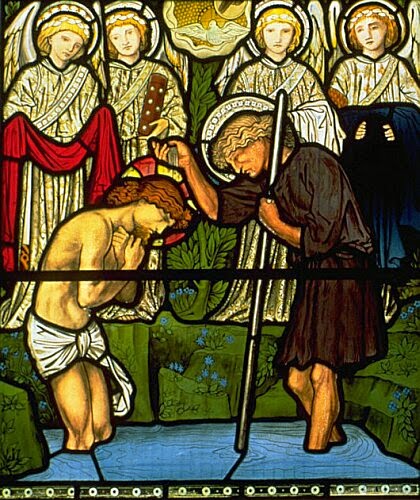
Scripture:  Acts 19:1-7 and Mark 1:4-11
Sermon:  Going beyond the A-B-C's and even D's of being a nice church; living into the E, F, G and H of Christian community

Have you ever been to, or been part of a church that just didn’t seem to “have it”?  Where everyone was nice, everything was good, and they did the right things, but something was missing – where some spark or passion, some flow of deeper vitality just wasn’t there? 

A number of years ago – maybe fifteen, I was guest preacher one Sunday at a local church while their minister was on vacation.  I looked forward to it because it was one of the larger and historically more prestigious churches in the Presbytery.  

The day I was there, though, I still remember as one of the darkest and most depressing experiences of church worship I have ever had.  The sanctuary was large and beautiful.  The liturgy was well-thought-out, the lay leadership skilled and experienced, the music well-chosen and potentially inspiring.  The people who were there were nice; more than that, they were good, moral people involved in all kinds of good things in the world. 

But all through the hour of worship I felt something was missing.  In the absence of whatever it was, the sanctuary seemed more dark than light , the people more depressed and tired than joyful, their gathering more yearning and anxious than vital and hopeful. 

That happens in churches – more often than we realize, and I’m sure it happens here at times as well. 

Years before that, back in the mid-eighties when I studied for a year in Boston I worshipped for a while at a church that had been recommended because of their minister, who was regarded as one of the brighter lights and leaders of the denomination – a great preacher and a good leader in thoughtful mission to the world.  I looked forward to it; it seemed Sunday morning as well as Monday to Friday were to be part of my education in ministry. 

But I stopped worshipping there after three or four Sundays.  I found it too tiring because of what I felt about the minister’s burden.  It seemed to me he was so skilled, so in touch with things, so determined that the congregation be led on a journey of faith into greater mission to the world, and so aware of his call to lead them there that the whole of the worship experience seemed to rest on his shoulders, and the success (or failure!) of it seemed to hang on his every word and gesture.  It was so carefully designed and constructed and so dependent on his delivery of what was promised, that I found myself exhausted by the end of it, by the fear that maybe this time it wouldn’t work, something would go wrong, and everything would shatter and fall into pieces because of it.   

In all that minister was doing and carrying on a Sunday morning, and what the congregation let him do and carry, it seemed there was something missing.  That happens among ministers – more often than we realize, and no doubt it also happens with me. 

The problem is not new.  The problem of “something missing” is as old as the church.  In today’s story from the Book of Acts – the book of the earliest communities of Christ, the leaders of the brand-new Jesus movement sense something missing in the new church in Ephesus.  What they diagnose it as is the absence – or at least the not-yet-presence of the Holy Spirit and the congregation’s not-yet-openness-to the flow and the deeper vitality of the Holy Spirit within their gathering. 

Paul says, “Did you receive the Holy Spirit when you became believers?”  They reply, “No, we have not even heard that there is a Holy Spirit.” 

3“Into what then were you baptized?” he asks.  “Into John’s baptism,” they answer.   

To which Paul says, 4“You have to realize John baptized with a baptism of repentance.  He invited people – as prophets do, into moral community – into turning from evil, doing good and trying to change the world around them for the better.  And that is good; the world needs communities and networks of good and moral people. 

“But he also pointed people to One who was still to come with something more and new – Jesus, who would baptize people in a new and deeper way into the life and flow of the Holy Spirit – into a new and more intimate relationship of God and humanity, a new way of being human beings, and a way of being together not only nice and moral in a way that the world always appreciates, but deeply spiritual and holy in ways that are understood only by those who are inside it themselves.”  

5On hearing this, the believers in Ephesus are baptized in the name of the Lord Jesus, 6Paul lays his hands on them, the Holy Spirit comes upon them, and they speak in tongues and prophesy – all twelve of them who are there. 

In many communities of the earliest church, speaking in tongues was seen as the sign of really participating in the life and flow of the Spirit of Christ in the world.  It was a sign of being opened to, and filled with a power and a life from beyond themselves.  It was a language that neither Rome nor Jerusalem controlled or understood.  It united believers across other boundaries and differences that divided them.  It lifted their spirits with a beauty, vitality and hopefulness that was not of their design, but a gift from of God.  It caught them up in something greater than themselves, and helped free them to follow the leading of God in ways that others – even very good and moral people, often were not. 

We’re somewhat leery of this, of course, and even Paul came to see that speaking in tongues is not the only sign – and not the best test of whether a congregation is open to the Spirit or not.  In I Corinthians he says the deepest gift of all, and the greatest sign of a church living deeply in God’s flow, is love – love of God in all we do, say and have; and love of neighbour as ourself.   

And it’s in that vein – in that spirit, if you will, that this morning I suggest a few things we might be on the lookout for today as signs of living beyond niceness and goodness, in the deeper, more holy flow of the Spirit of Christ and of God at work.  I want to mention four things and for ease of memory I offer them as the E, F, G and H of being in deeper community with Jesus beyond the A, B, C and even D of being a good and moral church. 

This is not as a way of testing whether we are Christian or not as a church, or truly spiritual or not.  These are more simply possible elements of deeper spirituality today that sometimes are and sometimes are not true of us, that we can encourage and nurture when we see them emerge in our life together, and that we can seek out and be open to in intentional ways when we do not. 

The first of the four is Ease.  A truly spiritual community – like a moral community, is moral and good, cares about making Earth a good place to be for all creatures, a commits itself to the kinds of actions and programs that make a difference for good in the world.  But it does this with a kind of ease and absence of anxiety that is not always true of good people and moral communities. 

I wonder sometimes about John in the Gospel as he goes about his ministry of prophetic preaching and practice.  He does great and courageous work with his moral preaching, his prophetic critique of the corruption of the government and culture of the day, and his invitation to people of all kinds to clean up their act.  He is the epitome of the moral and prophetic voice of the community’s whole faith tradition. 

But does he sometimes feel it’s all up to him?  Why does he get so harshly judgemental of people who don’t listen and change their ways?  And does he worry sometimes about what he will actually accomplish – maybe create a bit of discomfort among the elite and inspire a little bit of change for a while among the populace, but in the end be gone with the world still carrying on much as it always has? 

Being moral and good can be exhausting.  It makes you hungry for signs of success and open to depression, despair and desperate measures when they aren’t there.   

But people open to the life and flow of the Spirit, who know themselves caught up in something bigger than themselves and than the world and the powers of the day, can go about the work in a different spirit – not thinking they have make the world good or else, but more simply doing what they can to be part of a future coming by a Power greater than themselves.  It’s not up to them to make the new heaven and earth; they simply answer the invitation to start living it now, as a witness to what is promised and will surely come. 

Which leads to Freedom, and even Foolishness sometimes in what is done – two F’s of the community of God’s Spirit.   

Not everything has to be calculated, or part of some program with a definable end, designed to create a manageable and measurable good outcome.  Rather, sometimes a community of Christ will do something destined to fail or be a waste of time and effort, just because it seems to be part of who Christ is and what Christ loves – like a congregation using well-designed colourful worship bulletins that are more expensive than plain paper; or a handful of elderly women dressing up as Raging Grannies, standing near a naval base to sing funny home-made songs about the evil of war and nuclear weapons; or a Sunday school class cleaning garbage off a section of highway knowing full well that in two weeks there will be just as much and maybe even more garbage thrown back onto it. 

When you live in the flow of the Spirit, not everything is subject to cost-benefit analysis because who knows what seeds sown into the world bear fruit?  Who knows that even the ones that seem to die are fruitless or useless in their being sown? 

Which leads in a way to another F – Forgiveness that’s based on Grace – the G of spiritual community, the Grace of God that passes all understanding.   

In a community open to the Spirit rather than just committed to doing good and being right, there is room for mistakes and error, and room always for forgiveness, learning and growth because we are not always right or good – not in our thoughts or actions, not in the ways we treat one another, nor the ways we think of, and represent God.  We are all here by grace – and a community of the Spirit of Christ and of God remembers this about themselves and about others.  It makes room for all who – like ourselves, make mistakes and are broken. 

Which involves then a fourth thing – the H of truly spiritual community – Honesty, primarily honesty about ourselves.  When we count on being nice and good, and that’s how we sell ourselves, we are not really free to admit mistakes, reveal our warts, or share our questions and doubts.  But when we know that by grace we are part of something bigger and better than ourselves, we don’t have to pretend anymore.  We don’t have to fear our mistakes and try to justify ourselves when we’ve done wrong.  When we hurt one another and act badly together, we don’t have to deny or ignore what’s been done, and just blindly hope time alone somehow heals all wounds. 

Rather, we can talk about these things – be honest about our wounds and our wounding.  Through humble honesty we can grow spiritually and find an even deeper unity that has nothing to do with being right, and everything to do with right relations. 

The world doesn’t often teach us how to do this.  It’s not part of the old way of being human.  But it is part of the new way of being human that the community of Christ at its best is about.  Beyond being nice, good and moral, we are baptized into a new way of living together in the world – the way God has intended people to be all along, and that has been revealed and made available to us now in these days in Jesus.   

So in this season of Epiphany, as we let Jesus lead us deeper and deeper into the light of God’s life, we learn to look for these elements of openness to his Spirit – Ease in the good that we do, Freedom and even Foolishness sometimes in what we find ourselves doing, Grace in our acceptance and embrace of others, and Honesty about who we really still are and what we really still do.  As we see these elements of spiritual life emerge in our life together, we can support and nurture them.  And as they do not, we can choose to seek them out and learn to grow into them.

Wednesday, January 07, 2015

Towards Sunday, January 4, 2015 (Baptism of Jesus)

Scripture:  Acts 19:1-7 and Mark 1:4-11
Sermon theme:  Beyond Goodness

I wonder how John the Baptizer really felt about Jesus. 

John was doing great and courageous work with his moral preaching, his prophetic critique of government and society, and his invitation to people to clean up their act.  But he also knew the limits of what he and his followers would actually accomplish in the world -- a bit of discomfort among the elite, a bit of cleaning up for a while among the populace, but in the end he would be gone and the world would continue much as it always did.

There was something missing from his program and among his followers -- as there is ultimately in many programs and movements of moral reform, and according to the Gospel John knew Jesus would bring it -- a new spirit that would fill people from within and change the world and our life in the world from the inside out, so real transformation would occur as a matter of new (or mature) human nature, and not because of people's commitment to a program or movement.

What do we do as disciples and Christians when "something is missing"?  When goodness, morality, niceness, charity and commitment to doing good things just don't seem enough?

I ask the question because I think that all churches -- ours included, often find themselves facing it. 

On Sunday, together we'll bring the question to God in worship.

Wednesday, December 17, 2014

Towards Sunday, Dec 21,. 2014 (Advent 4)

Scripture: 2 Samuel 7:1-11 and Luke 1:26-38

You just gotta love Nathan.  Quite a gutsy (and other words come to mind) prophet.

He's a court prophet to King David, which means David turns to Nathan for holy wisdom and advice from God, and Nathan in turn knows who signs his paycheque. 

David is newly installed as king.  Finally settled in his new royal digs, David decides to build God a house as well, as grand as his.

God has been David's and the people's saviour and guide all along -- from the time God led Israel out of their slavery to Egypt, travelled with them through the wilderness, led them into the promised land, and then helped them become a kingdom.  Through all this time God has literally travelled with the people.  Unlike other gods who dwelt in fixed places and shrines, God's presence has been resident in the ark of the covenant which the people have carried with them wherever they have gone, and has been housed in a tent whenever they stop and settle down. 

God has been portable, but now David wants to build a house for God as grand as his own, so he and God can settle in and settle down together.  He tells Nathan his plan, and Nathan (good court prophet that he is), says, "Go ahead!  God is with you!" 

But that night Nathan gets a different word from God, and in the morning has a different message for the king -- one of the most bitingly sarcastic and ironic messages you can imagine a court prophet giving his boss. 

Nathan tells David that God's real answer is, "You plan to build me a house?  Ha!  Let's think back a bit about who has really built what for whom, between the two of us." And then he ends with a wonderfully delicious word-play: "You will not build me a house (of wood, stone and precious metal); it's I who will make you a house (of ancestors who will live out my good will in the world)."

How does it feel to hear that God is not interested in settling in -- with us, or with anyone?  That God's only real interest is to keep doing what it takes and keep going where is needed to shape people into communities that will faithfully live out God's will for Earth, and be an example to the rest of the world of how it can be done?

Isn't that what Christmas is about, though?  About God coming to us -- not to settle down in any kingdom or building or ritual or tradition or structure or system we might see as "it", but to be living and portable among us in the most radical way imaginable -- as portable as an ark, as moveable as a tent, as unexpected as a baby, as unpredictable and redeeming as a Jesus.

We need and we enjoy our structures -- our houses (holy and otherwise), our rituals, our signs of the season, our routines of worship and faithfulness -- all those good, settled things.  But it's good to remember these are more God's gifts to us to help give faithful shape to our life and to help us keep following God, than they are our gift to God to give God a place to settle into, and a way to settle down.


Monday, December 15, 2014

Sermon from Sunday, december 7, 2014

Scripture:  Psalm 85; 2 Peter 3:8-15

I’m growing to appreciate the Psalms more than I might have in the past.  I appreciate their honesty in the variety of feelings and human experience they bring to God, and the simplicity and directness of the faith they express.

Like the psalm this morning – Psalm 85:

4Restore us again, O God of our salvation,
and put away your indignation toward us.
5Will you be angry with us forever?
Will you prolong your anger to all generations?
6Will you not revive us again,
so that your people may rejoice in you?
8Let me hear what God the Lord will speak …

As we’ve heard, this psalm was written and shared among the people in a time that should have been happy for them, but wasn’t.  
 
The situation is that they have finally returned from the Great Exile.  Years earlier – generations earlier, they had lost everything as a kingdom.  Because of their foolishness as a people and because of the corruption and misdirection of their leaders, they had lost their kingdom and had been taken into exile – as forced labour, really – into Assyria and then Babylon.  And they have come to understand and accept all that.  They can see how they brought their misfortune and downfall on themselves.

But now, by what they can only describe as an act of God, they are back home.  What they come home to is a mess.  The city of Jerusalem – including both the royal court and the holy temple, have been destroyed.  The land around – farms, villages, small industry, are in ruins.  But now that they are home, they can do something about it.  They have a chance to rebuild what they let fall down; they can regain what they lost and threw away.

Except, it hasn’t happened.  Some years have passed.  The people made a little start.  But then they stalled.  They started arguing about how they should rebuild, and what should come first.  They divided into factions and started to fall back into old ways – the ways that had got them into trouble in the first place.  It seems nothing is really better.  Under the veneer or the cover of what should be a happy and forward-looking time, they are still a shambles and in ruins as a people.

It’s kind of like this past Friday’s Spectator.  I picked up the paper first thing Friday morning and what I saw on the front page, covering three of the four columns, is the headline “Burlington’s Christmas Cheer” with a three-column full-colour picture of a house on Spruce Avenue in Burlington all decorated and lit up for Christmas.  All above the fold.  And before my first cup of coffee.
 
What a start for the day – Christmas joy – I thought of silent night, and peace on earth, good will among men, and women, and children, and all God’s scattered and sundry beasts and creatures.  ‘Tis the season  …   And isn’t that what we want to feel?  And do feel?

But then I noticed the headline beside this one, also at the top of the page, in the one right-hand column that remained: “City Hall: Council hears new approach to noise complaints” – a story about a plan to send by-law and police officers together to investigate noise complaints between 1 and 7 am on Thursday, Friday and Saturday nights.  It seems peace on earth – at least peace and quiet in some neighbourhoods still isn’t quite here, doesn’t come naturally.  Disturbing the peace is still a problem looking for an answer.

And then inside, starting on page three, the avalanche of other stories:  

·         two stories about different groups of First Nations people seeking redress for what they see as lies and betrayal, and cultural genocide practiced as recently as the 1960’s and 70’s right here in Canada;

·         a story about a Hamilton man pleading guilty to stabbing his father; another about the need for a culture of peace at City Hall; another about Canadian political leaders taking pot shots at each other in the media;

·         and from around the world stories about ten police officers in Chechnya killed by militants; the fragility of peace in Afghanistan; protests in the States against the Grand Jury decision not to indict a white police officer caught on video in the chokehold death of a black man.

I went back to the first story about Burlington Christmas Cheer to recover something positive, and read the sub-headline under the picture of the Christmas house:  “People (well, almost everyone) love the light display that electrifies the neighbourhood.”  Some are upset by the traffic and noise the display brings into their neighbourhood.

And isn’t that what we and our world are really like – still like, even now in the month of December as we start to plan for, and look forward to Christmas?  Like the people of Israel back in their own land, wanting to sing songs of rejoicing, but knowing that under the cover of a happy time of rebuilding and forward-looking planning, a lot is still in shambles and in ruins?

So the psalmist cries out:
 
1Lord, you were favorable to your land;
you restored the fortunes of Jacob.
2You forgave the iniquity of your people;
you pardoned all their sin.
3You withdrew all your wrath;
you turned from your hot anger. 

4Restore us again, O God of our salvation …
6Will you not revive us again…
7Show us your steadfast love, O Lord,
and grant us your salvation. 

It’s interesting that the psalmist here does not ask God to make everything better – to fix what is still broken, to do the people’s work for them.  He begins by recalling the beginnings. With the reference to Jacob, the people’s ancient ancestor who because of the foolishness and sinfulness of his sons ended up in slavery in Egypt, the psalmist brings to mind the whole story of how God created the people of Israel in the first place by leading them out of slavery in the exodus, leading them to the Promised Land, and along the way – in the middle of the story, with the Ten Commandments giving them instruction in how to live rightly with one another and other people once they are in the Promised Land.  

God didn’t solve all their problems for them.  But God gave them what they needed to be able to live rightly, and gave them freedom and a place where they could do that – where they could grow up from being slaves and like children in the world, to live as real human beings, mature in their wisdom and in their relations with others.

And that’s what the psalmist asks for in this time of distress as well.  As you did for them, O God, may you do for us.  Restore us; revive us again.  Free us from the foolishness and sin that still bedevil us, speak to us again about right living, and give us time and space and a chance to start again.   

And isn’t that what Christmas is?  Isn’t it an answer to that prayer, and an answer to the universal prayer of the human heart for another chance to live rightly, another encouragement to learn to grow into the maturity and wisdom God wants us to have as human beings?

We sometimes wish, sometimes believe, and sometimes fear that the ultimate truth about God is that in the end God will come down from heaven in irresistible power, angry at sin and with belt in hand, to set things right and put an end to what’s wrong.  “Don’t make me come down there!” is the cleverly worded threat we see sometimes on billboards and church sign-boards, to encourage us to smarten up and play nice.   

But, the thing is, God has come down, and it hasn’t been in that way.  In Christmas, in the coming of God in human flesh, in the birth of Jesus God comes not with belt in hand and forceful voice to whip us into shape but as a baby put into our hands to draw us out of ourselves and whatever mess we have created, and into loving wonder.  And from that baby and the kind of life he grows into and lives out in the world, we receive as gift what we need to know about right living and how the world is made good. 

Restore us, O God, and revive us again.  Forgive us our sin, free us from our waywardness and illnesses and addictions and private and public foolishness.  Speak to us again of your way of right living.  And give us time and space to grow into it – one more step, one more day, one more season, one more year.

As we gather each year around the manger and take the Christ-child into our hands and into our hearts, we are given again what we need to catch on to God’s way of being, and to grow just a little bit more into living it out.  Because Christmas is not just about the birth of Jesus.  It’s about our birth as a new and renewed people.  It’s about our growing up just a little bit more as human beings.

And that’s worth celebrating.  That’s worth decorating and lighting up a house for.

Wednesday, December 03, 2014

From Sunday, November 30, 2014

Scripture:  Psalm 80
Sermon: 

Every week the Revised Common Lectionary offers four readings for use in worship – Old Testament, Psalm, Gospel and New Testament letter.  The psalm this week is Psalm 80 – a lament, and when I read it I was caught by two things in it.
 
One is its honesty about the mess God’s people and the kingdom of Israel are in; the other is the openness and simplicity with which the psalmist and all who pray this psalm ask for help from God and God alone.  Three times – in verses 3, 7 and 19 this plea of longing rises to heaven, “Restore us, O God; / Let your face shine, that we may be saved.”  It reminds us that from beginning to end and right at the heart of all our life, including our biggest messes, our true and best hope is in God and in how God looks at us.
 
My father-in-law at the end of his life seemed to boil his faith down to a few essentials, and one of those was an old Hebrew blessing from the Book of Numbers that Moses is said to have learned directly from God, and passed on to Aaron and his sons: 

                The Lord bless you and keep you;
                the Lord make his face to shine upon you,
and be gracious to you;
                the Lord lift up his countenance upon you,
and give you peace.

Everywhere he went – to Walmart, Tim Horton’s, church, on the street, Bill Newell would stop people, put his hand on their shoulder, look them in the face, and just offer them this blessing.  I wonder what it felt like – to be offered the hope of God looking upon you face to face with loving kindness. 

Last week we celebrated the baptism of Ethan Beattie.  It was also Reign of Christ Sunday, and we had a great time.  The liturgy was full and helpful in opening us to God.  Ethan charmed us all.  Our spirits were high.  Karen was struck by the amount of laughter in the service.  The music was robust and joyful, especially the final hymn – “Rejoice, the Lord is King.”  All went well, just as we had planned and hoped for.   

Then something happened and something was done that no one, not even the people involved, had planned on.  While we were standing and singing the final hymn, Vera Bailey quietly stepped out from her pew near the back.  Leonard had to step aside to let her move into the aisle.  In the aisle she made her way up to the third row from the front where Stew Beattie was standing and cradling Ethan – contentedly asleep, in his arms.  As Vera stood in the aisle and looked at Ethan, her face beamed.  Stew looked at her, at Ethan, and back at Vera.  He and she together became one in their adoration of the baby.  I wished I had a camera at that moment, but maybe I’m glad I didn’t.  After maybe a whole minute, Vera nodded to Stew and moved back to her place with Len in their pew near the back.

We don’t do that kind of thing here normally, do we?  And I wonder.   

Vera said later she just felt she had to.  There was no way not to go up and just look at the baby.

And was that event – that unplanned obedience to an inner urging of Spirit, the willingness to step outside the box of our liturgy – was that an unveiling of God’s face shining upon us?  I know what came to mind for me as I watched this unfold was the Gospel story of Anna – an elderly female prophet in the temple of Jerusalem, bursting into praise when she sees the baby Jesus brought by Mary and Joseph for his dedication.  Somehow at that moment we as a congregation in Winona seemed to be caught up in, and to become part of God’s unfolding story – the story we read in the Bible. 

And maybe that’s what it is – what we hope for – that somehow and in some way we find ourselves living in the way of God, living out God’s good will, spontaneously living out of the knowledge of God’s kindly and loving gaze upon us all.   

“Restore us, O God; / Let your face shine, that we may be saved.” 

This psalm comes from a time of national crisis and distress.  Generations of morally bankrupt and politically misleading leadership have led to such a state of collapse that no amount of political or economic tinkering, no amount of military re-armament no amount of restructuring or rebranding, , amount of political spin or even change of leadership will be able to undo the harm that has been done to the kingdom, nor to stop its coming-to-an-end as a power for good in the world.   

In their distress and sense of loss the psalmist and whatever part of the people may have joined in reciting this psalm remember that their only real hope of being restored as a people of God for the good of the world is God’s covenant with them – God’s promise to show them the way of right relations in all things, and their willingness to listen and follow regardless of where it may take them or what it might require of them.   

“Restore us, O God; / Let your face shine, that we may be saved.”  They want to go back to the way things used to be – even if they never really were that way in reality, even then.  They want to move ahead into a new way of being, better than what they are now – even if they’re not quite sure how to get there. 

And isn’t that where we are now as well? 

Just last month we were all at least a little bit shaken as a nation when in the course of one week two members of the Canadian Armed Forces were killed in attacks in Canada.  I heard the news of Nathan Cirillo’s murder at the National War Memorial and the killer’s subsequent invasion of the House of Parliament on the radio in my car as I was leaving the church for a meeting.   

I was driving along Fifty Road and down the ramp onto the QEW – something I do almost daily and sometimes several times a day without even thinking.  That day, though, I felt a strange uneasiness and an odd disquiet.  The road and its traffic seemed different, looked different, felt different.  For a few minutes I found myself thinking that any one of these cars or trucks around me could be driven by a terrorist determined to crash into me or even blow a bunch of us up once we were together on the Skyway Bridge. 

With the shock we have felt, and the tear we have suffered in our sense of security in our own land many people, I think, have been looking for ways to go back to the way we used to be – even if we never really were as good or perfect as we think we were.  Others are looking for ways to move ahead to something better, even though we don’t really know – or cannot agree, what that should – or will be. 
 
On the day of the killing in Ottawa, the RCMP quickly described it as a terrorist attack, and thus quickly focused our sense of where the threat to our well-being lies.  The government introduced legislation to give more power of surveillance and detention to the police and the intelligence services.  Security has been heightened in a variety of places.  We have begun air strikes with other nations against ISIL targets in Iraq and Syria.  Our official national strategy is to restore our sense of security and well-being by protecting ourselves against radicalized people – especially Muslims, and terrorists at home, and to destroy them abroad.  It’s a tried-and-true – or at least, a tried-and-tried-again plan – something we’re used to, and familiar with.  It’s what we’ve placed our hope in many times in the past. 

And who knows?  Maybe this is the way God’s face is set.  Maybe this is the way God will bless.  The way that will bring us peace.   

Others, though, are feeling led in a different direction.  At the time of the killing some national news outlets held back from labelling it a terrorist attack, and took the time to find out what really could be known.  They chose not to fuel the hysteria that could have developed, so much so that a visiting American diplomat interviewed a day or two later said he wished the American media would react to things as rationally and helpfully.

After Nathan Cirillo’s funeral a girlfriend went public in saying she wished the government and media would stop debating whether he was a hero or not, and seeing terrorism as the threat, and would start to talk instead about the state of our criminal justice and mental health systems as the real threats that have been exposed to our well-being as a people.    

At Presbytery last month, Diane Matheson, one of our Conference staff also told us to get better at “connect[ing] with the youth – they’re the key!  [she said].  Radicalized religious youth are being converted en- masse because they need to belong to something.  Let’s bring them into our fold before they have a chance to be hurt by organizations that would exploit them.  We don’t need them to be the future of the church; we want them because we can help them belong to something [constructive rather than destructive of life and community.] Helping young people to build future stories for themselves – which may or may not involve the church – is a way to keep them focused on behaviours that will help them be successful.” 

And a Muslim imam said much the same thing in a radio interview a few days ago.  Instead of demonizing potentially radical groups and trying to return to what we imagine we used to be as a Christian nation, we should do what we can to strengthen our many religious communities, so that religious leaders of all kinds can better reach their respective flocks with the message that when they resort to violence, God – the true God of any name, is simply not with them. 

And I wonder.  Is that the way God’s face is set?  Is that the way of being caught up today in God’s unfolding story?  And of living out of God’s loving gaze upon us all? 

We need practice, don’t we, in seeking God’s face.  In knowing the direction God is looking and leading, and discerning together the kinds of actions and strategies that reflect God’s way. 

Is it safe to assume, though, that as it did for Vera and even for Stew last week, more often than not it takes us outside the box of what we have known so far, beyond the way we usually have acted, a step away from the same-old same-old into something we have not yet seen or been, something still in the making, still experimental, but something that will be the future that God wants us to start living towards right now because it is the best hope for the well-being of all that God loves. 

In this season we remember that the God above and beyond us all, who holds all things and all people, comes to us as a little baby, a new kind of life still needing to grow, that we and others are called to welcome, to cradle, and to properly adore regardless of where it may lead us and what it might require of us.  

“Restore us, O God; / Let your face shine, that we may be saved.”